How to Jump Start a Car Without Another Vehicle (2026 Guide)
4 proven methods to get your dead battery running — even when you’re completely alone
A dead car battery doesn’t care about your schedule. It happens in empty parking garages at midnight, on remote country roads, and in freezing cold driveways — usually when no one else is around to help.
The good news? You don’t need another vehicle to jump start your car. In 2026, portable jump starters, push-start techniques, and even basic road assistance can get you back on the road without waiting for a stranger.
This guide walks you through 4 methods ranked by reliability and ease, with step-by-step instructions, safety warnings, and common mistakes to avoid. Whether you drive an automatic or manual, a sedan or an SUV, you’ll find the right solution here.
Why You Need to Know How to Jump Start Your Car Alone
Most drivers assume someone nearby will help. But the statistics tell a different story:
- 44 million Americans experience a dead battery each year
- The average wait for roadside assistance is 45–90 minutes — longer in rural areas
- Battery-related breakdowns peak in extreme heat and extreme cold
- The average jump start service call costs $50–$150
Knowing how to jump start your car without another vehicle isn’t just convenient — it can save you hours of waiting, hundreds of dollars per year, and potentially dangerous situations. Here are the most common scenarios where this knowledge matters:
- Late-night parking lots — You left your headlights on and now your car won’t start. No other cars in sight.
- Remote roads — Camping trips, rural commutes, or highway breakdowns far from help.
- Cold mornings — Batteries lose up to 60% of their cranking power at 0°F (-18°C).
- Long-term parking — Your car sat unused for weeks and the battery slowly drained.
- Emergency situations — When you need to move quickly and can’t wait for a tow truck.
Method 1: Use a Portable Jump Starter (Best & Easiest Way)
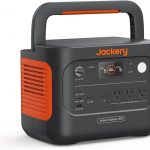
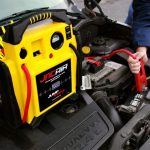
A portable jump starter is the single most reliable way to jump start a car by yourself. These compact lithium-powered devices have replaced the old lead-acid jump boxes and can start most vehicles in under 60 seconds.
What You’ll Need
- A portable jump starter rated for your engine size (400A+ for most sedans, 1000A+ for trucks/SUVs/diesels)
- Your vehicle’s owner manual (to locate the battery and ground points)
- Safety glasses (optional but recommended)
Step-by-Step: How to Use a Portable Jump Starter
- Park safely and turn everything off. Set the parking brake, turn off the ignition, and shut off all accessories — headlights, radio, A/C, phone chargers. Every watt matters when your battery is dead.
- Check your jump starter’s charge level. Most units have LED indicators. You need at least 25% charge (ideally 50%+) to start a car. If it’s below that, this method won’t work — skip to Method 4.
- Open the hood and locate the battery. Look for the positive (+) and negative (-) terminals. The positive terminal usually has a red cover or a “+” symbol. If the terminals are heavily corroded (white/green crust), clean them with a wire brush or a baking soda solution first.
- Connect the RED clamp to the POSITIVE (+) terminal. Make sure the clamp grips the terminal firmly — a loose connection is the #1 reason jump starters fail. The clamp should bite into clean metal, not corrosion or plastic.
- Connect the BLACK clamp to an unpainted metal ground point. Attach it to the engine block, a chassis bolt, or a dedicated ground point — NOT directly to the negative battery terminal. This prevents sparks near the battery, which can emit flammable hydrogen gas.
- Turn on the jump starter. Most modern units have a power button or auto-detect feature. Wait 30–60 seconds for the unit to transfer some charge into your battery. Some models display a “ready” light or beep when it’s go-time.
- Check for warning lights. If your jump starter has reverse polarity protection (and most do), it will alert you with a red light or alarm if the clamps are connected incorrectly. Fix the connections before proceeding.
- Start the engine. Turn the key or press the start button. Hold for a maximum of 5 seconds. If the engine doesn’t start, wait 30 seconds and try again. Most cars start on the first or second attempt.
- Disconnect in REVERSE order. Once the engine is running, remove the BLACK (negative) clamp first, then the RED (positive) clamp. This prevents sparks at the battery terminal.
- Let the engine run for at least 20–30 minutes. Drive at highway speeds if possible — idling recharges slower. This gives the alternator time to replenish your battery.
Safety Precautions
- Never connect the black clamp to the negative battery terminal — always use a chassis ground point.
- Remove jewelry (rings, bracelets, necklaces) before working near a car battery. A short circuit through metal jewelry can cause severe burns.
- Keep the jump starter away from the engine fan and belts once the engine is running.
- If the battery case is cracked, swollen, or leaking acid, do NOT attempt to jump start. Call a professional.
- Don’t smoke near the battery — batteries can emit explosive hydrogen gas.
- For electric vehicles (EVs): Unplug from any charger before jump starting the 12V auxiliary battery.
Common Mistakes to Avoid
- Loose clamp connections. If the clamp wiggles, it won’t deliver enough current. Clamp onto clean, bare metal.
- Storing a jump starter at 0% charge. Check it every 3 months. A dead jump starter is a paperweight.
- Cranking too long. More than 5 seconds of continuous cranking can overheat the starter motor. Wait 30 seconds between attempts.
- Ignoring accessories. Headlights, A/C, and heated seats draw power. Turn everything off before jump starting.
- Shutting off the engine too soon. If you turn off the car within 5 minutes, the battery hasn’t recharged enough. Drive for 20+ minutes.
- Using an underpowered unit. A 400A jump starter may struggle with a 5.0L V8 diesel. Check your engine’s cold cranking amps (CCA) requirement.
Method 2: Use Jumper Cables + Another Vehicle
The traditional method still works — but it requires a second car with a healthy battery and a set of jumper cables. Here’s the correct procedure:
What You’ll Need
- Jumper cables (at least 10 feet long, 10-gauge or thicker)
- A donor vehicle with a working battery
- Both cars parked close together (but NOT touching)
- Position both cars. Park them close enough for the cables to reach, but never let the vehicles touch. Turn off both engines and set parking brakes.
- Identify the batteries. Open both hoods. Find the positive (+) and negative (-) terminals on both batteries. Clean any corrosion.
- Connect RED clamp to DEAD battery’s positive (+).
- Connect the other RED clamp to GOOD battery’s positive (+).
- Connect BLACK clamp to GOOD battery’s negative (-).
- Connect the other BLACK clamp to an unpainted metal surface on the DEAD car’s engine block. NOT the dead battery’s negative terminal.
- Start the donor car. Let it idle for 3–5 minutes to transfer some charge.
- Try starting the dead car. If it doesn’t start after 3 attempts, wait 5 more minutes and try again.
- Once started, disconnect in REVERSE order: Black from dead car → Black from good car → Red from good car → Red from dead car.
- Drive the revived car for 20–30 minutes.
Why Jumper Cables Are Less Convenient
| Factor | Portable Jump Starter | Jumper Cables + Donor Car | |
|---|---|---|---|
| Need another person? | No | Yes | |
| Setup time | 1–2 minutes | 5–10 minutes | |
| Works in a parking garage? | Yes | Usually not (no donor car) | |
| Cost | $50–$150 one-time | $20–$40 for cables | |
| Weight/storage | 1–3 lbs, fits in glove box | 5–15 lbs, needs trunk space | |
| Extra features | USB charging, flashlight, tire inflator | None | |
| Risk of wrong connection | Low (built-in protection) | Higher (manual process) |
Bottom line: Jumper cables are cheap and effective when you have help. But if you’re alone at 2 AM, a portable jump starter is the clear winner. Check our best car jump starters roundup for top picks in 2026.
Method 3: Push Start (Manual Transmission Only)
If you drive a stick shift, you have a secret weapon: push starting (also called “bump starting”). This uses the car’s momentum to spin the engine through the drivetrain, completely bypassing the need for a starter motor or battery power.
Requirements
- Manual transmission (will NOT work with automatic)
- A slight downhill slope OR 1–2 people to push
- A safe, clear road with minimal traffic
- Turn the ignition to “ON”. You should see dashboard lights illuminate. The key must be in the ON position for the fuel pump and ignition to work.
- Press the clutch fully and shift into 2nd gear. Second gear provides the best balance of torque and ease. (1st gear is too aggressive and may cause the car to jerk violently.)
- Release the parking brake. Have your helpers push the car, or let it roll downhill. You need to reach about 5–10 mph (8–16 km/h).
- Quickly release the clutch (dump it). When the car is rolling at walking speed, release the clutch pedal in one smooth motion. You’ll feel the engine engage and hear it turn over.
- Immediately press the clutch back in. As soon as the engine fires, press the clutch to prevent stalling. Give it a little gas to stabilize the idle.
- Keep the engine running and drive for 20+ minutes. The alternator needs time to recharge the battery.
- Never push start on a busy road. You have limited control while the car is rolling without power steering or brakes.
- Don’t use 1st gear. It creates too much resistance and can damage the transmission.
- This method does not work if the battery is completely dead (0 volts) — you need at least enough power for the fuel pump and ECU.
- Not for hybrids or EVs. These vehicles don’t have a mechanical connection between the wheels and the engine in the same way.
Method 4: Call Roadside Assistance (Last Resort)
If none of the above methods work — or you don’t have the tools — calling for help is always an option. Here are the most common services:
- AAA membership — $60–$130/year, includes free jump starts (typically 4 per year)
- Insurance roadside add-on — Many insurers offer roadside assistance for $2–$5/month
- New car warranty — Most new vehicles include 3–5 years of roadside assistance
- Credit card perks — Premium cards (Amex Platinum, Chase Sapphire) include roadside dispatch
- On-demand apps — Services like Honk and Urgent.ly charge $45–$75 per jump start
What to Do After Jump Starting Your Car
Successfully jump starting is only half the battle. Here’s what you need to do next to prevent the problem from recurring:
- Don’t turn off the engine immediately. Keep the car running for at least 20–30 minutes. Short trips (under 10 minutes) won’t recharge the battery sufficiently.
- Drive at highway speeds when possible. The alternator charges faster at higher RPMs. Idling in traffic is much less effective than cruising at 55+ mph.
- Test your battery voltage. Use a multimeter: a healthy battery reads 12.6V with the engine off and 13.7–14.7V with the engine running. If it drops below 10V while cranking, the battery needs replacement.
- Check the alternator. If your battery dies again within a day or two, the alternator may not be charging properly. This is a $200–$600 repair.
- Look for parasitic drains. Aftermarket accessories (dash cams, phone mounts, alarm systems) can slowly drain your battery overnight. Unplug anything you don’t need.
- Recharge your jump starter. Put it back to full charge as soon as you get home. You’ll need it ready for next time.
How to Prevent Your Car Battery From Dying
Prevention is always cheaper and less stressful than dealing with a dead battery at the worst possible time. Follow these maintenance tips:
- Drive regularly. A car that sits for more than 2 weeks without starting will slowly lose its charge. Aim for at least one 20-minute drive per week.
- Turn off all accessories before exiting. Double-check headlights, interior lights, and dashcams. Even a small drain over 8 hours can kill a battery.
- Clean battery terminals every 6 months. Corrosion increases resistance and reduces the battery’s ability to accept a charge. Use a wire brush and a baking soda + water solution.
- Use a battery maintainer for stored vehicles. If you have a second car, boat, or RV that sits unused, a smart charger ($25–$50) keeps the battery topped up without overcharging.
- Replace your battery proactively. Most batteries last 3–5 years. If yours is approaching 4 years, have it load-tested. Replacing a $120 battery on your schedule beats being stranded.
- Keep a portable jump starter in your car. Even if you never need it, the peace of mind is worth it. Modern units cost $50–$150 and last for years. Browse our top-rated jump starters for 2026.
- Avoid extreme temperature exposure. Park in shade during summer and in a garage during winter when possible. Heat is actually worse for batteries than cold — it accelerates internal corrosion.
Frequently Asked Questions
Can I jump start a car with a completely dead battery (0 volts)?
Most portable jump starters can start a car even if the battery reads 0 volts, as long as the battery isn’t physically damaged. However, if the battery has an internal short circuit, a cracked case, or swollen cells, do NOT attempt to jump start — the battery needs replacement. If a jump starter doesn’t work after 3 attempts, the battery is likely beyond saving.
How many amps do I need to jump start my car?
It depends on your engine size. As a general rule:
- Small sedans / compacts (4-cylinder): 400–600 peak amps
- Midsize SUVs / V6 engines: 600–1000 peak amps
- Full-size trucks / V8 / diesel: 1000–2000+ peak amps
Check your vehicle’s owner manual for the recommended cold cranking amps (CCA). Buy a jump starter rated for at least that CCA value.
Is it safe to jump start a car in the rain?
Yes, but take extra precautions. Keep the jump starter and cable connections as dry as possible. Use an umbrella or have someone hold a jacket over the battery area. Water alone won’t cause a short circuit at 12V, but standing water near the battery terminals or a soaked jump starter unit could be dangerous. Modern jump starters with IP65+ water resistance ratings handle rain fine.
Can a portable jump starter damage my car’s electronics?
Not when used correctly. Modern lithium jump starters have built-in protection against reverse polarity, over-voltage, and short circuits. The risk comes from using cheap, uncertified units or connecting the clamps backwards. Stick with reputable brands that include safety certifications (UL, CE, FCC). If your vehicle has a start-stop system or smart alternator, check the owner’s manual — some manufacturers require specific jump starting procedures.
How long does a portable jump starter hold its charge?
Most quality lithium jump starters hold 80%+ of their charge for 6–12 months in storage. However, you should check the charge level every 3 months and top it up if it drops below 50%. Extreme temperatures (both hot and cold) accelerate self-discharge. Store your jump starter at room temperature when possible — the glove compartment in summer can reach 140°F+ and degrade the battery.
Recommended Products
Based on our hands-on testing, these are the jump starters we recommend keeping in your car:
WOLFBOX MegaVolt 24 Air — 4000A Jump Starter + 160PSI Air Compressor
Our Rating: 88/100 — The best all-in-one emergency tool we’ve tested. 4000A peak current handles everything from compact cars to full-size diesel trucks. The built-in 160PSI air compressor doubles as a tire inflator, making it a true 2-in-1 device.
Best for: SUV/truck owners who want one device for both jump starting and tire emergencies.
Check Price on Amazon →WOLFBOX MegaVolt 24 — 4000A Pure Jump Starter
Our Rating: 90/100 — The original MV24 is a beast. 4000A peak current, starts V8 trucks on the first try, and fits in your palm. If you don’t need the air compressor, this is the more affordable option.
Best for: Drivers who want maximum cranking power in the smallest package.
Check Price on Amazon →Quick Comparison: All 4 Methods at a Glance
| Method | Difficulty | Cost | Time | Works Alone? | Best For |
|---|---|---|---|---|---|
| Portable Jump Starter | Easy | $50–$150 (one-time) | 2–5 min | Yes | Everyone |
| Jumper Cables + Donor | Moderate | $20–$40 | 10–20 min | No | When help is available |
| Push Start | Moderate | Free | 5–15 min | Needs 1–2 helpers or slope | Manual transmission only |
| Roadside Assistance | Easy | $45–$150 per call | 30–90 min wait | Yes (just wait) | No tools available |
Final Thoughts
The best time to learn how to jump start a car is before you need to. A $60 portable jump starter in your trunk turns a stressful 2-hour ordeal into a 2-minute fix. Every driver should own one and know how to use it.
If you take away just one thing from this guide: buy a portable jump starter today, charge it fully, and put it in your car. You might not need it for months. But when you do, you’ll be glad it’s there.
Have questions about choosing the right jump starter for your vehicle? Check out our comprehensive jump starter buying guide for detailed comparisons and expert recommendations.
.eval-latest-block { margin: 48px auto 24px; padding: 32px 28px; max-width: 1100px; border: 2px solid #ff9900; border-radius: 12px; background: linear-gradient(180deg, #fff8f0 0%, #ffffff 100%); font-family: inherit; } .eval-latest-block h2 { font-size: 26px; font-weight: 800; color: #1a1a1a; margin: 0 0 8px; text-align: center; } .eval-latest-block .eval-sub { font-size: 15px; color: #666; text-align: center; margin: 0 0 28px; } .eval-latest-grid { display: grid; grid-template-columns: repeat(2, 1fr); gap: 18px; margin-bottom: 28px; } @media (max-width: 720px) { .eval-latest-grid { grid-template-columns: 1fr; } } .eval-latest-card { background: #fff; border: 1px solid #e5e5e5; border-left: 4px solid #ff9900; border-radius: 8px; padding: 16px 18px; transition: box-shadow 0.2s; } .eval-latest-card:hover { box-shadow: 0 4px 12px rgba(0,0,0,0.08); } .eval-latest-card .eval-card-tag { display: inline-block; font-size: 11px; font-weight: 700; color: #ff6b00; background: #fff0e0; padding: 3px 10px; border-radius: 10px; margin-bottom: 8px; text-transform: uppercase; letter-spacing: 0.5px; } .eval-latest-card h3 { font-size: 17px; font-weight: 700; margin: 0 0 6px; line-height: 1.3; } .eval-latest-card h3 a { color: #1a1a1a; text-decoration: none; } .eval-latest-card h3 a:hover { color: #ff6b00; text-decoration: underline; } .eval-latest-card .eval-card-price { font-size: 18px; font-weight: 800; color: #d40000; margin: 4px 0 8px; } .eval-latest-card p { font-size: 14px; color: #555; line-height: 1.5; margin: 0; } .eval-pillar-cta { background: #1a1a1a; color: #fff; padding: 20px 24px; border-radius: 8px; text-align: center; } .eval-pillar-cta p { margin: 0 0 12px; font-size: 15px; color: #ddd; } .eval-pillar-cta a { display: inline-block; margin: 4px 8px; padding: 10px 22px; background: #ff9900; color: #fff; text-decoration: none; font-weight: 700; font-size: 14px; border-radius: 6px; text-transform: uppercase; letter-spacing: 0.3px; transition: background 0.2s; } .eval-pillar-cta a:hover { background: #ff6b00; } @media (max-width: 720px) { .eval-pillar-cta a { display: block; margin: 8px auto; max-width: 280px; } }📦 Latest from EvalShare
Just reviewed — independently tested, no manufacturer samples
FAMVIVA 2K Solar Security Camera (4-Pack)
Best solar camera system for full-perimeter coverage. No monthly fees, 4-6 months battery life.
FAMVIVA 2K Security Camera (2-Pack, Wired)
Most affordable 2K wired camera. Plug-in design, perfect for renters and apartments.
ANYCUBIC PLA Filament 1.75mm 10KG Combo
5 rolls, 5 colors, ±0.02mm tolerance. Cheapest per-kg PLA we’ve tested that doesn’t fail quality checks.
ANYCUBIC ACE Pro Filament Dryer
Heated storage (50°C) holds 4 spools. Solves the ‘wet PLA stringing’ problem at the source.
Looking for more? Check our complete buying guides:
Best 3D Printing Supplies 2026 → Best Home Security Cameras 2026 →