Electric fireplaces are one of the few home comfort products where the honest comparison is not between two similar models. A gas fireplace requires a fuel line, a permit, and a certified installer. A wood-burning stove requires a chimney or a freestanding hearth with clearances. An electric unit requires a wall outlet. That difference in installation is the main reason electric fireplaces outsell every other type in the residential market, and it is the first question to ask when deciding whether this kind of product is right for you.
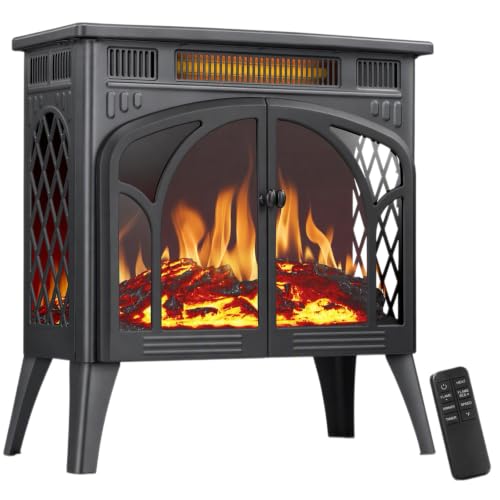
This review covers the 24.3-inch freestanding electric fireplace stove with 3D flame effect, a 1500W heater, adjustable flame speed, overheat protection and remote control. It is a research-based review built from current listing data, published specifications, price history and buyer feedback signals. We have not run long-term hands-on testing on this unit, and we flag below which claims you should verify before ordering.
Affiliate disclosure: EvalShare may earn a commission when you buy through links on this page. Product details, pricing, ratings, and availability can change, so check the retailer page before buying.
Quick Verdict
The 24.3-inch freestanding electric fireplace stove is a well-matched choice for anyone who wants the look and feel of a hearth without building anything. Its 4.4-star rating from more than 1,100 reviews is the strongest rating-volume combination in this category, and the feature set covers what buyers actually use: adjustable flame speed, a remote, and overheat protection. The limitation to understand is scale: a 1500W ceramic heater warms a small to medium room, not a house. If you want to heat an open-plan living space in winter, this is a supplemental heat source rather than a primary one.
What 1500W Actually Heats
Heater wattage on electric fireplaces is the specification most often read past, so it is worth being precise. A 1500W ceramic heater is a room-level heat source for a space of roughly 150 to 250 square feet in a typical winter home with reasonable insulation. It works best in a bedroom, a home office, a den, or a smaller living room where you can close a door and keep the heat where you want it.
Two practical points follow from this. First, closing the room matters enormously: an electric heater in an open floor plan heats the entire space and eventually competes with the thermostat. Second, running it on a lower setting and leaving it on continuously often beats running it at full power in short bursts, because ceramic elements deliver heat steadily and do not overshoot the way some other elements do.
| Specification | Published figure | What it means for a buyer |
|---|---|---|
| Heater output | 1500W | Room-level heat for a small to medium space. Not a whole-home solution. |
| Flame effect | 3D flame effect with adjustable speed | Cosmetic, and it runs independently of the heater so you can use the flame without heat. |
| Controls | Remote control plus onboard controls | Useful for heat you do not want to get up for. |
| Safety | Overheat protection | Shuts down when the unit overheats. A real feature, not a spec-sheet filler. |
| Size | 24.3 inches | Compact enough for an apartment or a mantel shelf, small enough to check clearance requirements. |
| Installation | Plug-in, no venting | The main advantage over gas and wood. Needs a standard outlet and floor clearance. |
Why 3D Flame Effect Matters More Than Expected
The flame effect is the part of the product most people judge on appearance, and it is worth approaching with a specific question: is the effect convincing in daylight, or only at night? Many electric fireplaces look convincing in a darkened room and obviously fake with the curtains open. Ask yourself which situation matches your use, because that determines whether you will be satisfied with it.
Adjustable flame speed is the feature that separates a good unit from a mediocre one, and it is genuinely useful. A slow flame reads as a calm, real fire for reading or sleeping. A fast flame reads as energetic and looks more like a gas fire. Buyers who report being satisfied with the effect typically mention that they adjust the speed to match the time of day rather than leaving it at the default.
One expectation to set: an electric fireplace simulates a flame. It does not produce heat from combustion, so there is no real radiant heat rising off the front glass, and the smell is different because nothing is burning. If you are coming from a wood stove and you rely on the dry heat that radiates into the room, that difference is worth weighing before you order.
Everyday Use Cases
The primary use is a self-contained living room, bedroom or home office where you want a warm focal point and zone heating without touching the central thermostat. Many buyers run it as the room heater during the day and turn the flame on in the evening purely for atmosphere with the heat off, which is where the independent flame control pays off.
A second use is seasonal decoration in a living room that does not get used much in winter, or in a rental where installing a permanent fireplace is not possible. The 24.3-inch footprint makes it portable enough to move between a bedroom and a living room as the season changes.
A third use is as an aesthetic anchor in an apartment, a condo, or a home with a vaulted ceiling where a real fireplace would be structurally impossible. In that case the flame effect is doing nearly all the work, which makes the appearance of the effect the single most important thing to evaluate.
Pros and Cons
Pros
- 4.4-star rating from more than 1,100 reviews, a strong signal for the category
- No venting, chimney, permit, or gas line required
- Adjustable flame speed adds real atmosphere
- Flame effect operates independently of the heater
- Overheat protection is included
- Remote control avoids getting up to adjust settings
- Compact 24.3-inch footprint suits apartments and smaller rooms
Cons
- 1500W covers a small to medium room, not a large open space
- Simulated flame, with no genuine radiant heat from the front
- Operating cost is higher than gas in some regions
- Needs floor clearance and a nearby outlet
- No information on thermostat accuracy or timer function in the listing
- Flame effect realism varies with ambient light
Design and Setup
Setup is a matter of placing it on a flat floor surface, plugging it into a standard outlet, and switching it on. The clearance requirements matter more than the assembly: electric fireplaces specify a minimum distance from the front, sides, and rear to combustible material, and those numbers should be followed exactly rather than estimated. A rug edge, a curtain, or a bookcase that is slightly too close is the most common reported issue in this category.
Check whether your outlet is on a dedicated circuit. A 1500W heater draws close to the limit of a standard 15-amp circuit at full power, and plugging it into an overloaded extension or power strip is a fire risk. If the outlet is shared with a large television or a computer tower, plug the fireplace directly into the wall. Also check the cord length against the distance to your nearest outlet, since a fireplace that requires a cord extension is both a safety concern and a trip hazard.
How It Compares
Against a gas fireplace, this unit wins decisively on installation and running cost and loses on realism, heat output, and the fact that gas fireplaces can serve as an actual heating source for a whole house. Against infrared heating, it wins on atmosphere, since a radiant heater warms you but gives the room nothing to look at, and it loses on efficiency, because a large share of the wattage goes into the light effect rather than the room.
Against a portable oil-filled radiator, it is a better fit if atmosphere matters to you and a worse fit if you care purely about heating efficiency per watt. Against a gas heater, it is safer and simpler in a rental or a smaller space. The most useful comparison for most buyers is against doing nothing in the room they actually use, because the value of a fireplace is often that it lets you heat one room rather than the whole house.
Performance Considerations
Verify the thermostat behaviour yourself, because it is not described in the listing. A fireplace that cycles on and off noticeably is a common source of complaints, and it is not something you can tell from a product page. If you run it for long stretches, a thermostat with a usable cycle range is what separates a unit you keep from one you switch off after a week.
Also confirm the timer and scheduling options. A timer that turns the heater off after a set number of hours is valuable for a unit you forget about, and it is a specification worth checking because heater models within the same product line differ on it. Finally, note that the 3D flame effect is a light source. In a dark room you are adding some brightness to the space, which is either pleasant or unwanted depending on how you use the room.
Who Should Buy It?
Buy this fireplace if you want the appearance and the ambience of a hearth with zero installation, you are renting or your home cannot support a real fireplace, and you want to heat one specific room rather than your whole home. It suits apartments, condos, basements finished without a chimney, and any space where the visual effect is doing as much work as the heat.
Skip it if you need to heat a large open living space, if you want the authentic experience of a burning fire including radiant heat and the smell of combustion, or if the operating cost of electric heat does not make sense in your local utility rates. If your goal is purely warmth and efficiency, a dedicated radiator or a heat pump will deliver more heat per watt than any unit that spends wattage on a flame effect.
FAQ
Is a 1500W electric fireplace enough to heat a room?
A 1500W heater comfortably warms a small to medium room of roughly 150 to 250 square feet in a reasonably insulated home. It works best when you can close a door and keep the heat in the space rather than letting it spread through an open floor plan. For anything larger, treat it as supplemental heat alongside your main heating rather than a replacement.
Do electric fireplaces need venting or a chimney?
No. Electric fireplaces produce heat with a resistance or ceramic element rather than combustion, so there is no flue, no chimney, no vent, and no permit. They need a standard wall outlet and adequate clearance from combustible material on all sides, which is why they work in apartments where a real fireplace never could.
How realistic is the 3D flame effect?
It is a simulation rather than a real flame, and realism varies with lighting conditions. It tends to look most convincing in a dim room and less convincing in daylight with the curtains open. The adjustable flame speed is what helps most, since a slow flame reads as a calm real fire while a fast one reads as gas. Judge the effect in the lighting conditions where you actually plan to use it.
Who should buy the 24.3-inch freestanding electric fireplace stove?
Buy it if you want fireplace ambience with no installation, you are renting or cannot install a real fireplace, and you want to warm one specific room. Its 4.4-star rating from more than 1,100 reviews reflects a design that holds up. Look at a radiator or heat pump instead if warmth alone is the goal, and skip it if you need to heat a large open space.
Read our review standards for how we separate research-based notes from hands-on testing, and see our affiliate disclosure for how we fund this site.