If you have ever stood in a kitchen holding a glass while water slowly drips into a plastic tray, you already know why bullet ice makers exist. The small hollow cylinders that these machines produce are the same shape you get from a restaurant dispenser: dense, slow to melt, and pleasant to drink. They are not the same as the loose, rounded cubes from a standard fridge ice tray, and the difference matters more than most listings admit.
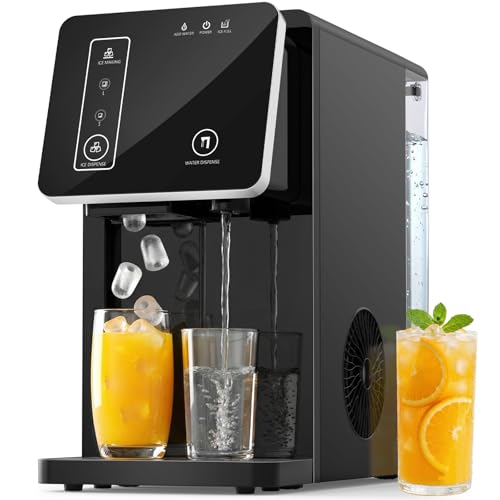
This review covers the Electactic Compact Bullet Ice Maker & Water Dispenser, a countertop model with a 3.3L tank, a 1L bin, low-water and ice-full indicators, and a published 26lbs/24h output figure. It is a research-based review built from current listing data, published specifications, price history, and buyer feedback signals. We have not run long-term hands-on testing on this unit, and we tell you exactly which claims you should verify yourself before ordering.
Affiliate disclosure: EvalShare may earn a commission when you buy through links on this page. Product details, pricing, ratings, and availability can change, so check the retailer page before buying.
Quick Verdict
The Electactic Compact Bullet Ice Maker is a sensible pick for buyers who care about usable daily output and a compact footprint over premium extras. Its 4.3-star rating across more than 2,700 reviews gives it a solid credibility signal, and the 26lbs/24h headline figure is high for a unit that does not require a drain line. Two caveats deserve attention before you buy: the 1L storage bin is small, so you will empty it more often than you expect, and bullet ice makers need a defined freeze window to produce hollow cylinders, which means the machine is not instant. If your priority is a full bin of cubes for a party, look at a traditional cube maker instead.
Why Bullet Ice Is Worth the Premium
The practical difference between bullet ice and freezer tray cubes is melt rate. Tray cubes are thin and porous, so they dilute a drink within a couple of minutes. Bullet ice forms around a downward-facing water jet inside a freezing chamber, which produces a hollow cylinder with a denser wall. That shape holds its structure longer in a glass, which is the reason restaurants and bars pay for it.
The second difference is texture. Bullet ice is noticeably harder and crunches rather than crumbles, so it does not water down a drink as quickly in the first few sips. If you enjoy a drink over twenty minutes rather than draining it in five, that difference is the entire reason to buy this category over a $40 cube maker.
Key Specs and What They Actually Mean
Compact ice makers are sold on headline numbers that hide the practical constraints. Here is how the Electactic’s published figures translate into daily use.
| Specification | Published figure | What it means in practice |
|---|---|---|
| Ice output | 26 lbs per 24 hours | A theoretical maximum with the tank refilled and the bin emptied. Real output drops with ambient temperature and how often you open the lid. |
| First batch | 6 minutes | Time to the first usable pieces. A second cycle takes longer, so the first batch is the number that matters for a party. |
| Water tank | 3.3 L | Large enough to skip refilling mid-session. Check whether your tap fits the included fill method and whether the lid fits under low cabinets. |
| Storage bin | 1 L | Approximately 15 to 20 bullet pieces at a time. This is the most common buyer complaint area, so plan for frequent emptying. |
| Ice shape | Hollow bullet cylinders | Restaurant-style shape with a slower melt rate than tray cubes. |
| Indicators | Low water, ice full | Useful, but they tell you to refill or empty rather than how much water is left. Check the indicator type before assuming it is a measurable gauge. |
That 1L bin is the detail most buyers underestimate. It holds roughly a dozen to twenty bullet pieces, which sounds like a lot until you fill four glasses in a row. If your use case is a dinner party where everyone wants ice at once, budget for a larger bin or a second unit rather than assuming this one will cover the room.
Everyday Use Cases
The most common use for a countertop bullet ice maker is daily drink service: iced coffee in the morning, sparkling water at midday, and a cold drink in the evening. For a household drinking two to four iced drinks a day, the 3.3L tank means you refill roughly once a day and the 6-minute first batch means you can start it while you get ready.
Home bar use is the second case. Bullet ice is the standard for whiskey, old-fashioned cocktails, and anything served over a single large cube or with a mixer, because it holds its shape through a slow drink. The trade-off is speed: if you are hosting eight people and all of them want a drink within ten minutes, this machine will not keep up from a cold start, and you should start it well ahead of time.
A third case is small-office or party use, which is where the listing’s “kitchen office party” framing comes from. It is worth taking seriously, but with a caveat: the machine needs counter space, a nearby water source, and somewhere for the meltwater to drain. Countertop ice makers do not use a drain line, so they need a drip tray or a sink nearby, and they sit directly on your work surface. Measure the space before you order.
Pros and Cons
Pros
- Published 26 lbs/24h output is strong for a compact unit
- 4.3-star rating across more than 2,700 reviews is a meaningful confidence signal
- 3.3L tank allows roughly a day of drinks between refills
- 6-minute first batch is fast enough for a morning routine
- Low-water and ice-full indicators reduce guesswork
- No plumbing installation required
Cons
- 1L storage bin is small and needs frequent emptying
- Bullet shape requires a longer freeze cycle than cube makers
- Counter footprint and meltwater drip tray need planning
- Output claims are measured under ideal conditions and drop in warm rooms
- Noise level is not stated in the published specifications
Design and Setup
Setup on a countertop ice maker is deliberately simple: place it on a level surface, fill the tank, close the lid, and let it run. There is no water line to connect and no drain to install. The level surface point matters more than it sounds, because a tilted machine produces ice unevenly and can leak at the base seal.
Measure your counter before buying, including the clearance needed to lift the lid and to lift the tank out for filling. Lift-out filling is convenient, but it needs vertical space above the machine, and this is a common reason units end up on the floor rather than the counter. Also consider the noise. Ice makers in this class are not silent, and compressor noise matters in an open-plan kitchen or a small office.
How It Compares
Compare the Electactic against two alternatives rather than against a single competitor. Against a traditional cube maker, it wins on melt rate and drink quality but loses on bin size and on how quickly it can produce the first round of cubes. Against a portable bullet ice maker, it wins on tank capacity and stated daily output but loses on portability, which matters if you want ice in a dorm room or a patio.
The comparison that matters most is against doing nothing. If your household buys a bag of ice from a convenience store two or three times a week, a single machine at this price usually works out over a year. If you currently make ice in a fridge tray, the case rests on drink quality rather than cost, and you should weigh it accordingly.
Performance Considerations
Two published numbers deserve scrutiny. The 26 lbs/24h figure assumes ideal conditions: a room-temperature water supply, a cool ambient environment, and a bin emptied often enough that the machine is never blocked. In a warm kitchen or a garage, expect noticeably less. The 6-minute figure applies to the first batch after you fill the tank. Subsequent cycles take longer because the machine is already freezing.
There is also a practical detail about bullet ice that buyers often learn late: the hollow shape forms because the water jet freezes from the outside in, and if the chamber is not at the right temperature the pieces come out solid rather than hollow. If a batch comes out solid, the usual causes are a room that is too warm or a tank that was not cold enough beforehand. Let the machine run a few cycles before judging the output.
Who Should Buy It?
This bullet ice maker suits three specific buyers. First, households that drink several iced beverages a day and care about how the ice holds up in a glass. Second, anyone building a home bar where slow-melting ice genuinely changes the drink. Third, small offices or parties that need ice on demand without a trip to the store, and that have counter space and a nearby drain or sink.
Skip it if you need large quantities of ice quickly, since a bagged-ice dispenser serves a party better than a single 1L bin. Skip it if you are tight on counter space, or if the noise would be a problem in an open kitchen. And skip it if you only need a few cubes a day, because a simple tray freezer covers that at a fraction of the price.
FAQ
How much ice does a bullet ice maker actually make per day?
Published figures for this class usually run between 20 and 30 lbs per 24 hours, and this unit is listed at 26 lbs. Treat that as a ceiling rather than a daily guarantee: output falls in a warm room and whenever the bin fills up enough to slow the cycle. For most households the practical result is a bin you empty once or twice a day.
Is a bullet ice maker worth it compared to a fridge tray?
A bullet ice maker is worth it if you care about melt rate and drink texture, since the hollow cylinders hold shape noticeably longer than tray cubes. It is not worth it for cost reasons alone, because a tray is essentially free and a machine is not. If your drinks are consumed within a few minutes, the difference will not register.
Does the Electactic Compact Bullet Ice Maker need a drain line?
No. Countertop models of this type are designed to be self-contained: you fill the tank by hand and meltwater collects in a drip tray or an internal reservoir that you empty periodically. Confirm the exact draining method in the manual before you place it, since a drip tray next to a countertop you use for food is a minor annoyance worth checking in advance.
Who should buy the Electactic Compact Bullet Ice Maker?
Buy it if you drink iced coffee or cold drinks most days, run a home bar, or need reliable ice for a small office or party, and you have counter space for a compact unit with a small bin. Look elsewhere if you need a large volume of ice quickly, work in a very warm room, or want the lowest possible price for basic cubes.
Read our review standards for how we separate research-based notes from hands-on testing, and see our affiliate disclosure for how we fund this site.